All audiobooks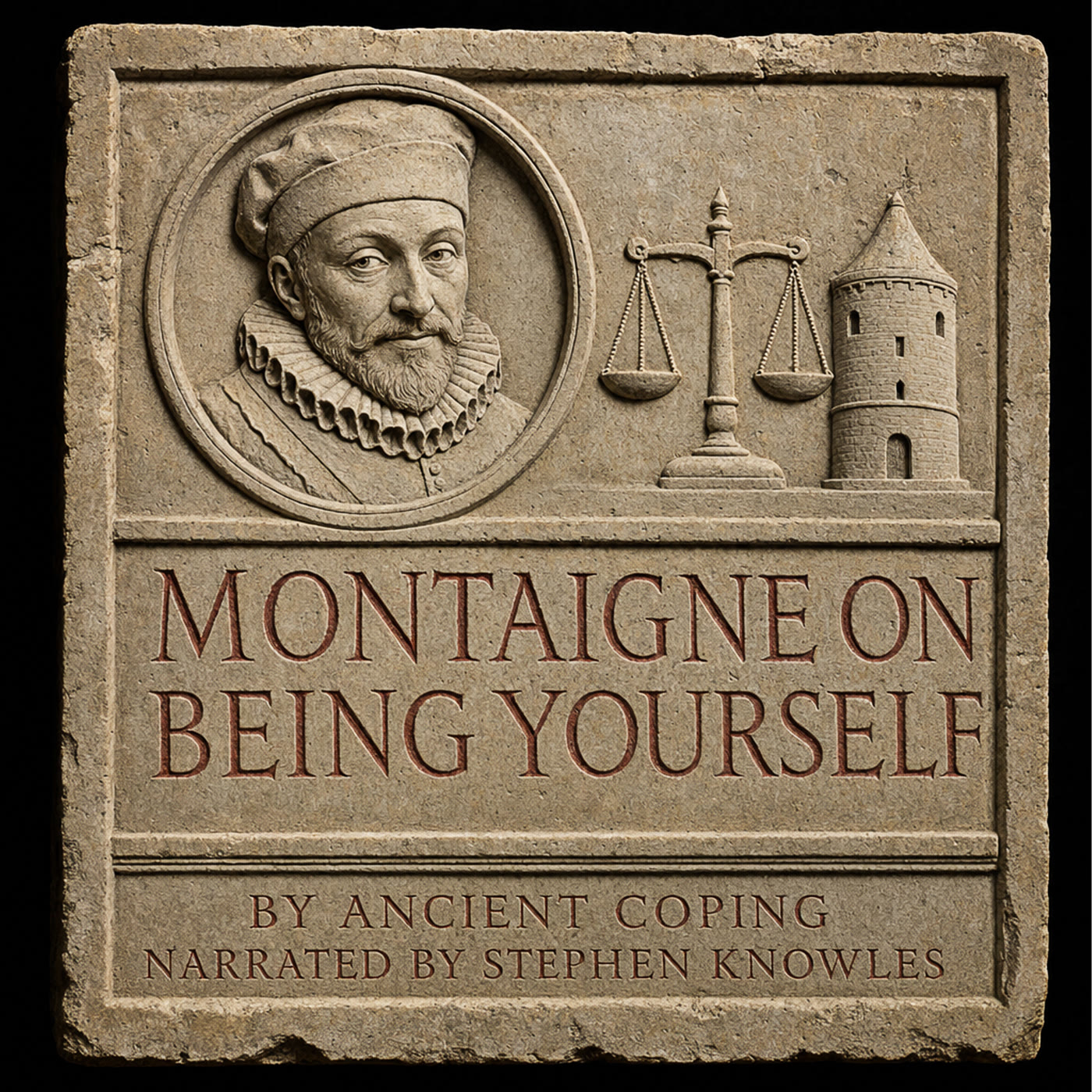
Purpose / 40m
Montaigne on Being Yourself
A Practical Guide to Identity, Authenticity, Solitude, and Living as Yourself
Free sample: the trailer
0:00
Purpose / 40m
A Practical Guide to Identity, Authenticity, Solitude, and Living as Yourself
Who are you when the role comes off?
Not the job title. Not the provider. Not the dependable one. Not the version of you your family, friends, or profession have learned to expect.
Montaigne on Being Yourself explores one of the most personal questions in philosophy: how do you belong to yourself after years of living through roles, duties, habits, and other people’s expectations?
At thirty-eight, Michel de Montaigne withdrew from public life to a tower filled with books and began writing about the one subject he could examine directly: himself. His moods. Contradictions. Body. Friendships. Fears. Habits. Opinions. He called these writings essays—attempts—and spent the rest of his life discovering that a person is never quite finished.
You’ll discover:
The goal is not to discover one permanent, final version of yourself.
It is to become someone you know well enough to live as.
The audiobook also includes a practical companion guide to help you separate your roles, inherited beliefs, and public identity from the person underneath them.
We'll email you the first chapter of Montaigne on Being Yourself after you confirm your address.
The last day of February, fifteen seventy-one. A man in south-west France is turning thirty-eight today. He is a magistrate, a nobleman, a respected public figure. He has spent years in courts and councils, among lawyers and politicians, doing what was expected of a man of his position. Today, he stops. He climbs the stairs of a round stone tower at the corner of his family's estate. On the top floor is a library, with a thousand books arranged on curved shelves, and windows looking out over the fields. On the wall, in Latin, he has had an inscription painted. It says, more or less, that on this day, his birthday, Michel de Montaigne, long weary of the servitude of the courts and of public duties, while still whole, has withdrawn to this place, where in calm and freedom he means to spend what remains of his life, now more than half run out. On the wooden beams above his head, he has had sentences painted. Dozens of them, in Greek and Latin, from the authors he loves. One of them, from the old Roman playwright Terence, says, I am a man, and nothing human is foreign to me. What he does in that tower, over the next twenty years, is something nobody had quite done before. He sits down and writes about himself. Not his achievements. Not his public life. Himself. His moods, his habits, his body, his doubts, his opinions, how he sleeps, what he eats, why he loved his best friend, what it felt like to nearly die after falling off a horse. He calls the pieces essays, from a French word meaning attempts or tests. He is trying himself out, on paper.
A Practical Guide to Feeling Lost, Rebuilding Purpose, and Becoming Present in Your Own Life
Stoic Lessons on Time, Busyness, Regret, and Living Before It Is Too Late
Ancient Lessons on Pleasure, Desire, Friendship, Simplicity, and the Art of Enough
A Practical Guide to Unfairness, Bitterness, Envy, Acceptance, and Knowing When to Fight Back