All audiobooks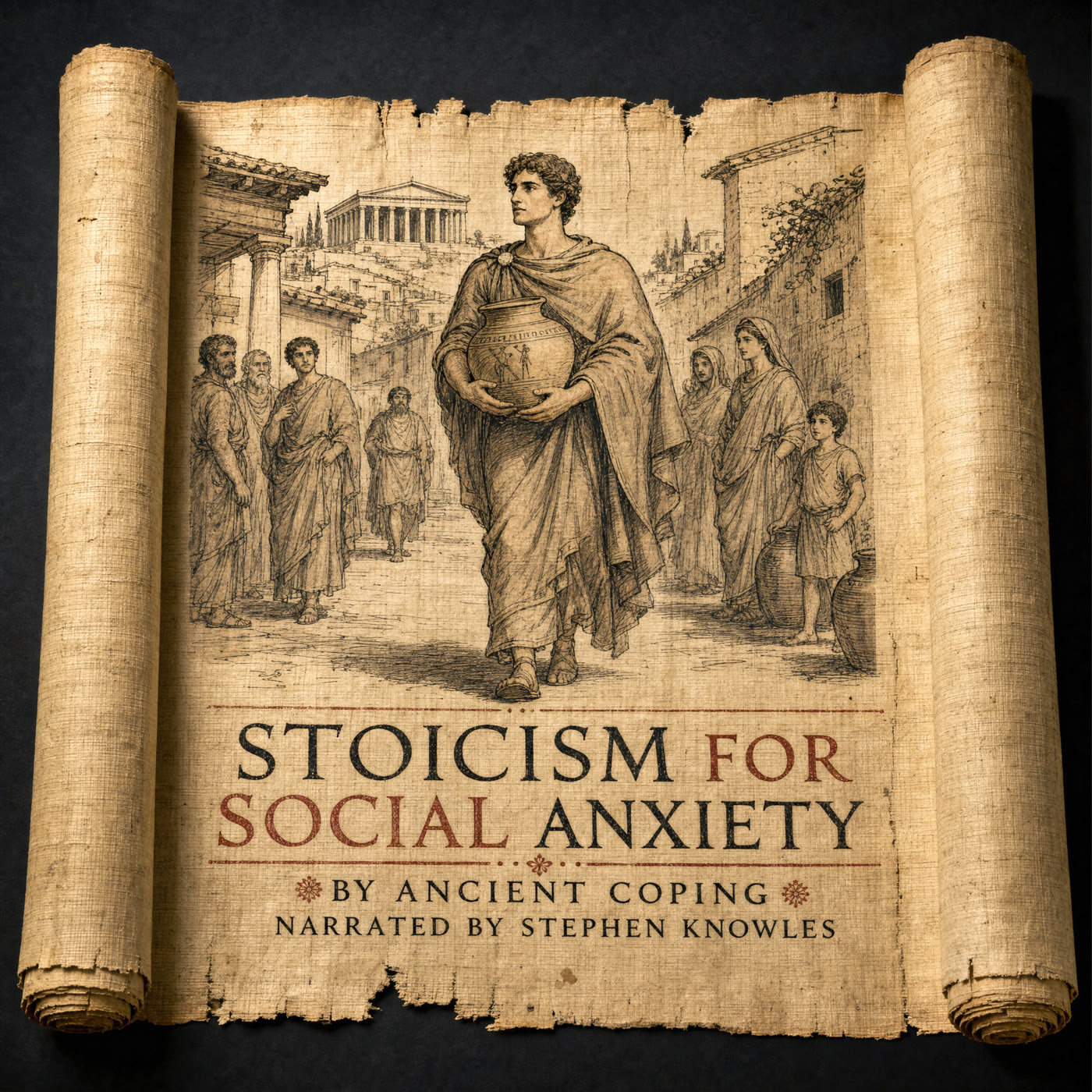
People / 39m
Stoicism for Social Anxiety
How to Stop Hiding, Face Social Fear Gradually, and Stay When You Want to Run
Free sample: the trailer
0:00
People / 39m
How to Stop Hiding, Face Social Fear Gradually, and Stay When You Want to Run
You are outside the room, the pub, the meeting, or the phone call.
Your heart is already going. You are rehearsing what to say, wondering where to sit, worrying that your face will go red, and considering an excuse that would let you escape.
Stoicism for Social Anxiety applies the practical ideas of Seneca, Epictetus, Marcus Aurelius, Cato, and Zeno to shyness, fear of judgment, embarrassment, avoidance, awkwardness, and the exhausting habit of monitoring yourself around other people.
The audiobook begins with a familiar social-anxiety moment: standing outside a gathering, checking your phone for no reason, rehearsing your entrance, and wondering whether it would be easier simply to go home.
You’ll discover:
The goal is not to become fearless.
It is to become willing to stay, speak, and participate while some fear is still there.
We'll email you the first chapter of Stoicism for Social Anxiety after you confirm your address.
You are standing outside the pub. You can see them through the window. Your colleagues, around two tables pushed together, laughing at something. You have been standing here for four minutes. You have checked your phone three times, not because anything has arrived, but because looking at a phone is a reason to be standing still. You are rehearsing. Hi, sorry I am late. No. Just, hi. Where do you sit? Next to who? What if the only free chair is in the middle? What if someone asks what you have been up to, and the honest answer is nothing, and you say nothing, and there is a silence, and everybody notices the silence? Part of you wants to turn around and go home. You could text that something came up. Nobody would mind. Nobody would even notice. And that thought, oddly, makes it worse. If you know that feeling, this book is for you. The racing heart before a phone call. The face going hot in a meeting. Typing a message in the group chat, deleting it, typing it again, and then not sending it at all. Lying awake after a party, replaying the one stupid thing you said. This is a book in a series called Ancient Advice for Modern Problems. And social anxiety might sound like the most modern problem of all. But it is not. Two thousand years ago, men blushed when they had to speak. Men dreaded being looked at. Men ran from embarrassment. And a group of philosophers called the Stoics had some surprisingly gentle, surprisingly practical things to say about it.
Stoic Tools for Credit Stealers, Chronic Complainers, Passive-Aggressive Emails, and Workplace Conflict
How to Have Difficult Conversations with Clarity, Courage, Calm, and Respect
A Practical Guide to Loneliness, Friendship, Purpose, and Learning to Be Good Company to Yourself

How to Stop Caring So Much What Other People Think and Build Your Life from the Inside Out