All audiobooks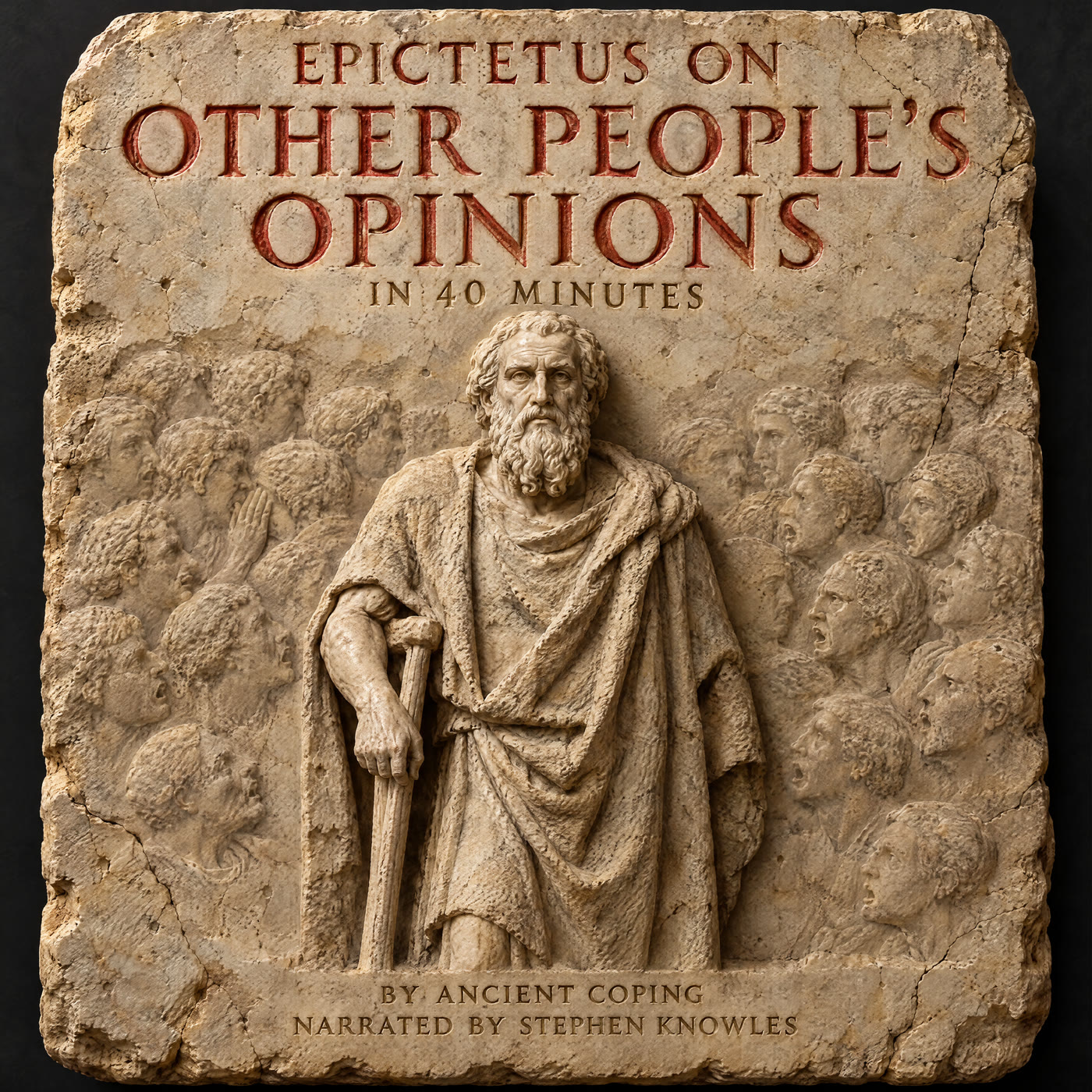
People / 39m
Epictetus on Other People's Opinions in 40 Minutes
Stoic Lessons on Reputation, Criticism, Approval, and Living by Your Own Judgment
Free sample: the trailer
0:00
People / 39m
Stoic Lessons on Reputation, Criticism, Approval, and Living by Your Own Judgment
How much of your life is being quietly decided by an audience?
A career you stay in because leaving would look like failure. A thought you keep to yourself in a meeting. A decision you explain before anyone has even criticized it. A piece of praise that lifts you for a day, and criticism that follows you for a week.
Epictetus on Other People’s Opinions in 40 Minutes explores one of the Stoic philosopher’s sharpest ideas: other people’s judgment belongs to them. Your character belongs to you.
Epictetus compared living for approval to handing your mind to strangers and allowing them to disturb it whenever they wished.
In about 40 minutes, you’ll discover:
The aim is not to stop listening to people.
It is to stop letting everyone have a vote.
The audiobook also includes a practical companion guide to help you examine whose opinions are actually influencing your decisions and where you have given away too much authority.
We'll email you the first chapter of Epictetus on Other People's Opinions in 40 Minutes after you confirm your address.
Nicopolis, on the western coast of Greece, a little after the year one hundred. A plain room with benches. The young men sitting on them are the sons of Roman senators and governors, sent across the sea to finish their education. Their whole futures depend on reputation. Who thinks well of them. Who speaks for them. What is said about them at dinner in Rome. At the front of the room is an old man with a lame leg, who was born a slave. His name is Epictetus. He owns almost nothing. And he is about to ask these polished young men a question that will make them shift on their benches. Suppose, he says, that someone took your body and handed it over to the first person who came along the street, to do with as he liked. You would be furious. You would call it an outrage. Then why, he asks, are you not ashamed that you hand over your own mind to anyone who happens along? So that if he insults you, your mind is thrown into confusion and distress. You have given a stranger the power to upset you whenever he pleases. The room is silent. A student named Arrian is writing it down, which is the only reason we have it. That question is nearly two thousand years old, and it has lost none of its edge. How much of your mind have you handed over? To your boss. Your father. Your wife's family. The men you were at school with. People on a screen whom you will never meet. How many of your decisions, what you do for a living, what you drive, what you say in a meeting and what you swallow, are really being made by an audience?
How to Stop Hiding, Face Social Fear Gradually, and Stay When You Want to Run
Stoic Tools for Credit Stealers, Chronic Complainers, Passive-Aggressive Emails, and Workplace Conflict
How to Have Difficult Conversations with Clarity, Courage, Calm, and Respect
A Practical Guide to Loneliness, Friendship, Purpose, and Learning to Be Good Company to Yourself