All audiobooks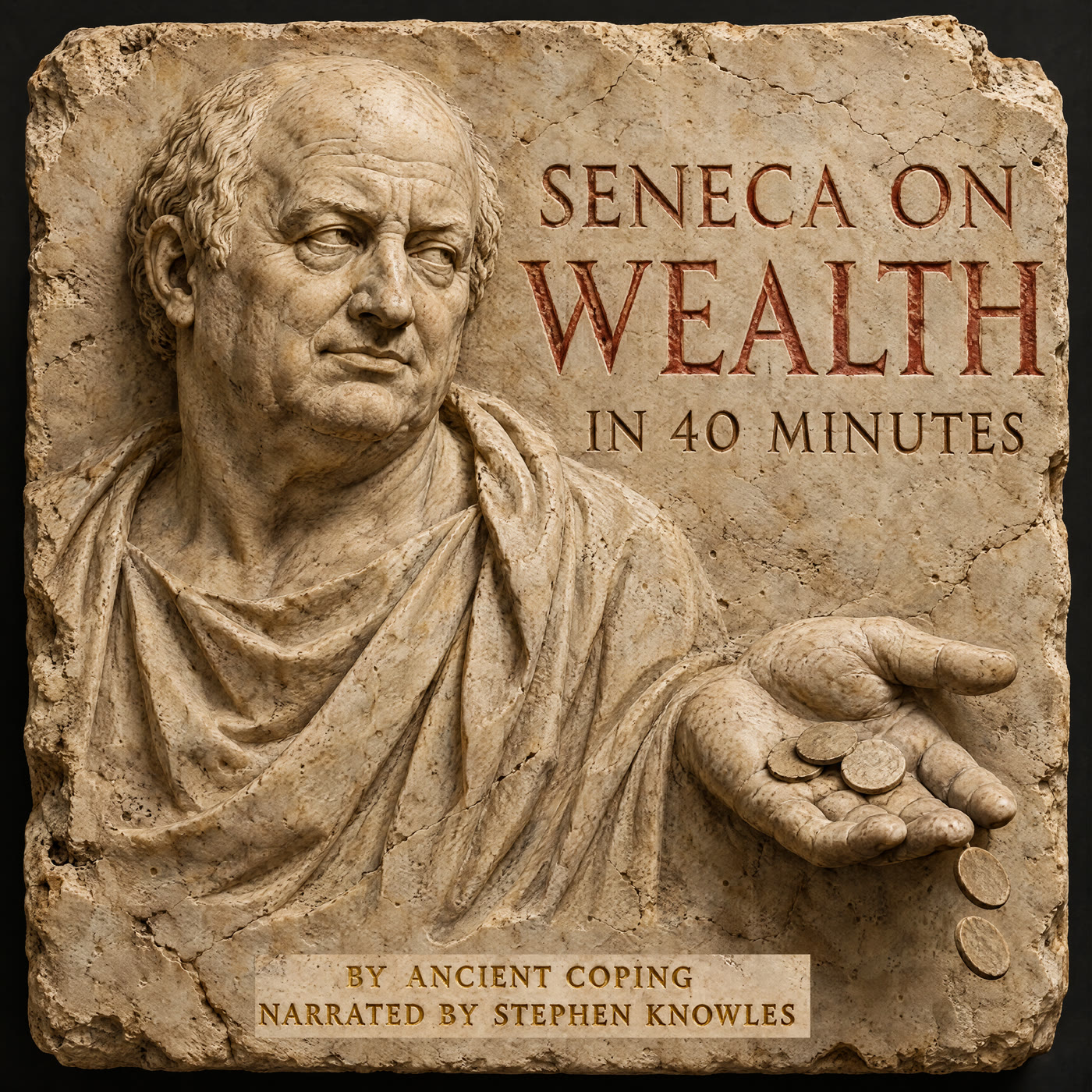
Work & money / 39m
Seneca on Wealth in 40 Minutes
Stoic Lessons on Money, Enough, Freedom, and the Cost of More
Free sample: the trailer
0:00
Work & money / 39m
Stoic Lessons on Money, Enough, Freedom, and the Cost of More
How much money is enough?
Seneca was one of the richest men in Rome, and one of history’s most famous Stoic philosophers. That contradiction makes his ideas about wealth unusually interesting.
Seneca on Wealth in 40 Minutes explores what he actually believed about money, luxury, ambition, fear, comparison, and freedom. His argument was not that wealth is bad. It was that wealth becomes dangerous when it stops serving you and starts giving the orders.
In this fast, practical audiobook, you’ll discover:
Seneca’s own life was complicated. He wrote about simplicity while possessing enormous wealth, and he openly admitted that he did not always live up to his philosophy. That tension is part of what makes his advice useful rather than abstract. This is not a book about rejecting ambition.
It is about becoming difficult for money to control.
The audiobook also includes a practical companion guide to help you apply Seneca’s ideas to your own money, possessions, work, and use of time. It includes reflection prompts, an “enough” exercise, a Master-or-Servant audit, the four core Seneca tools, and a seven-day Stoic wealth practice.
We'll email you the first chapter of Seneca on Wealth in 40 Minutes after you confirm your address.
Rome, in the year fifty-eight. A man named Publius Suillius is on trial, and he knows he is going to lose. He is old, bitter, and has nothing left to protect. So he turns on the person he blames for his ruin, the most powerful adviser in the empire, and he asks a question in front of everyone. By what wisdom, he says, by what teachings of the philosophers, did this man pile up three hundred million sesterces in four years of friendship with the emperor? The man he is talking about is Seneca. And the charge sticks, because the facts are not in dispute. Seneca, the Stoic, the writer of beautiful letters about wanting little, is one of the richest men in Rome. He owns estates across Italy and beyond, vineyards, gardens, villas. He lends money at interest in the provinces. One ancient writer claims he owned five hundred identical tables of rare citrus wood with ivory legs. That detail may be gossip. The fortune was real. So here is the obvious question, and we should ask it before we go any further. Why would you take advice about money from this man? There are two reasons. The first is that he had lived at both ends. Years before the fortune, he had been banished to a rocky island with almost nothing, and he had written from there that he was content. He knew wealth from the inside and its absence from the inside, which is more than most people who lecture on the subject can say. The second reason is that he answered the charge himself, in writing, and his answer is more honest and more useful than his enemies expected. We will get to it.
A Practical Guide to Facing the Numbers, Asking for Help, and Building Financial Resilience
A Practical Guide to Winning Without Losing Your Health, Family, Character, or Peace of Mind
A Practical Guide to Unfairness, Bitterness, Envy, Acceptance, and Knowing When to Fight Back
How to Stop Letting One Failure Define You and Become Stronger After a Setback