All audiobooks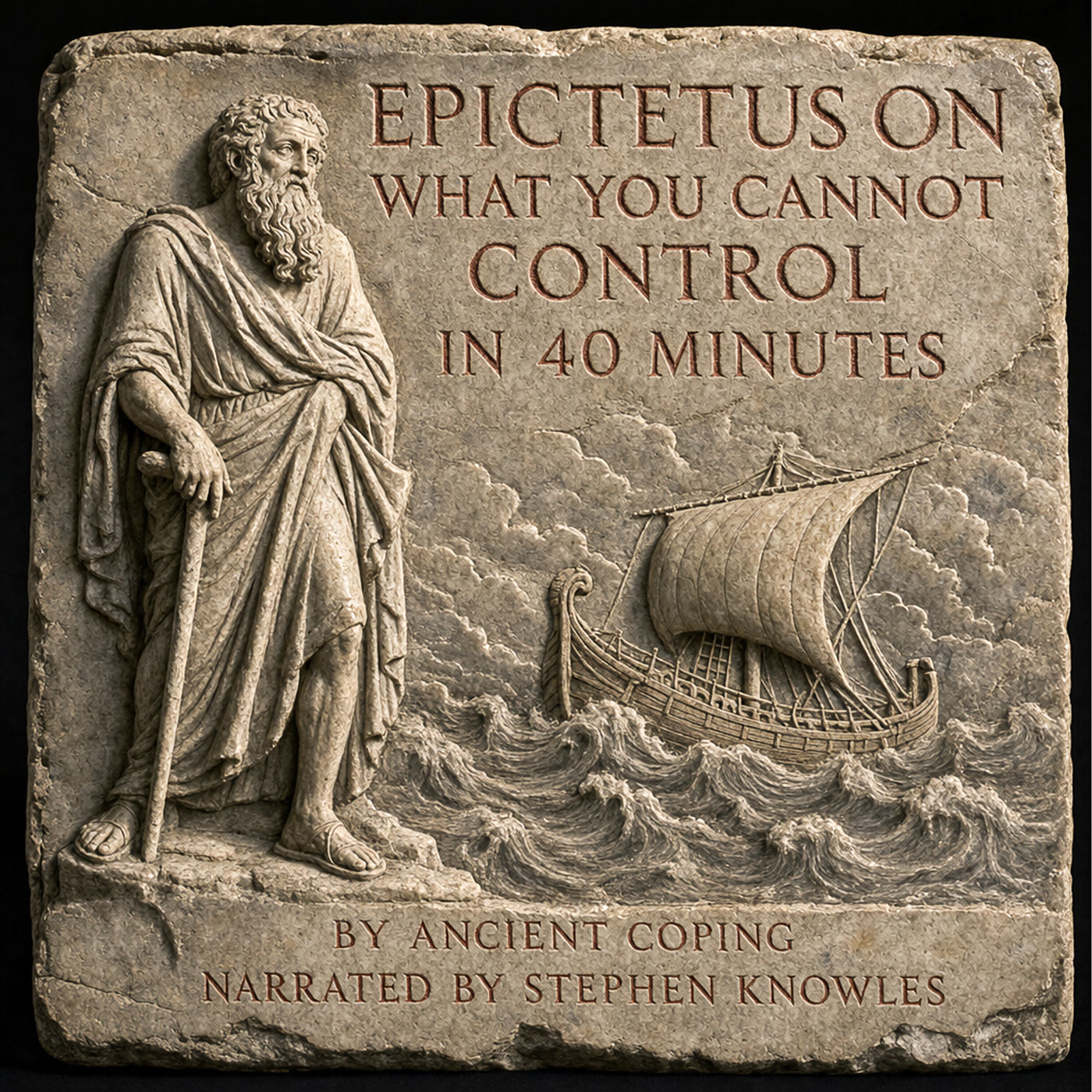
Mind & temper / 40m
Epictetus on What You Cannot Control in 40 Minutes
Stoic Lessons on Worry, Uncertainty, Acceptance, and Letting Go of Outcomes
Free sample: the trailer
0:00
Mind & temper / 40m
Stoic Lessons on Worry, Uncertainty, Acceptance, and Letting Go of Outcomes
You cannot control the verdict. The diagnosis. The market. Your adult child’s choices. What other people think. Whether the plan works.
But you can control what you do next.
Epictetus on What You Cannot Control in 40 Minutes explores the distinction at the heart of Stoic philosophy: some things belong to you, and others never did.
Epictetus learned this lesson under unusually hard conditions. Born a slave and left physically disabled, he built a philosophy around directing effort toward your own judgments, choices, and actions instead of exhausting yourself trying to govern outcomes that belong to other people, chance, the body, or the world.
You’ll discover:
The goal is not to care less.
It is to stop carrying the part that was never yours.
The audiobook also includes a practical companion guide to help you separate what is genuinely yours to act on from the outcomes you are exhausting yourself trying to control.
We'll email you the first chapter of Epictetus on What You Cannot Control in 40 Minutes after you confirm your address.
Rome, in the reign of the emperor Nero. A senator named Paconius Agrippinus is at the baths when a messenger finds him. Your case is being heard in the Senate today, the man says. Agrippinus has enemies, and in Nero's Rome a trial before the Senate can end in exile or death. Agrippinus says, good luck to it. Then he points out that it is eleven in the morning, which is his usual time for exercise and a cold plunge. And he goes off to have them. Some time later, the messenger comes back. You have been condemned. To exile, asks Agrippinus, or to death? Exile. And my property? It has not been confiscated. Then, says Agrippinus, let us go to Aricia, and have our lunch there. Aricia was the first stop on the road out of Rome. We know this story because, decades later, a teacher named Epictetus told it to his students as an example of a man who had learned the single most important lesson in his philosophy. Agrippinus could not control the Senate. He could not control Nero. He could not control the verdict. He had done whatever he could do, and the rest was out of his hands. So he went and had a cold bath, and then lunch. You may find that admirable, or you may find it slightly mad. Most men today are much more like the messenger. Pacing, checking, refreshing, trying to influence things that are already decided, and lying awake over things that have not happened yet. Your company is
Ancient Stoic Tools to Stop Worrying, Replaying, Second-Guessing, and Living in Your Head
Stoic Tools for Worry, Overthinking, Stress, and the Fear of What Comes Next
Stoic Lessons for Mastering Anger, Irritation, and the Urge to React
A Practical Guide to Unfairness, Bitterness, Envy, Acceptance, and Knowing When to Fight Back