All audiobooks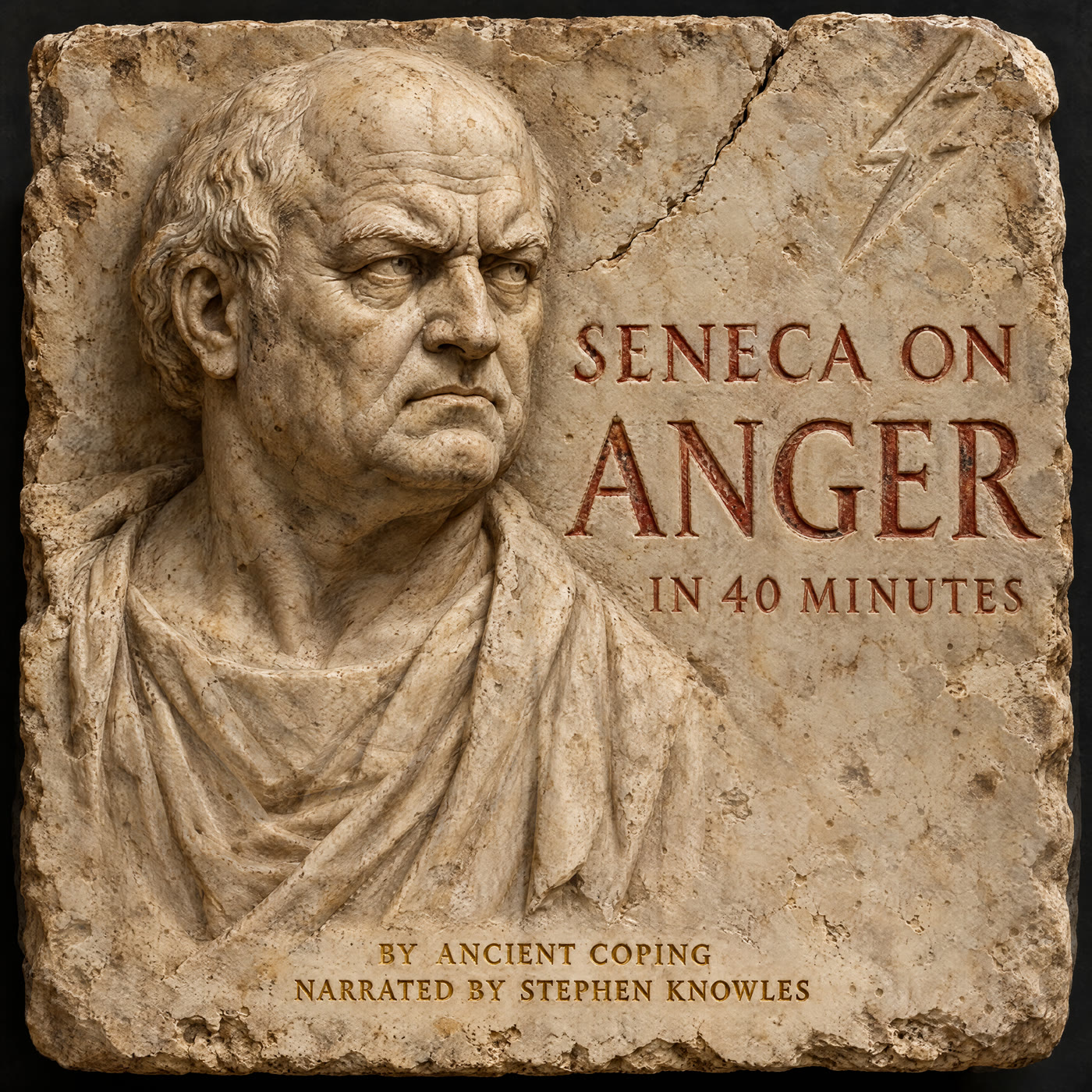
Mind & temper / 40m
Seneca on Anger in 40 Minutes
Stoic Lessons for Mastering Anger, Irritation, and the Urge to React
Free sample: the trailer
0:00
Mind & temper / 40m
Stoic Lessons for Mastering Anger, Irritation, and the Urge to React
What if the most dangerous part of anger is not the first flash, but what happens in the seconds after it?
Seneca on Anger in 40 Minutes turns one of the Stoic philosopher’s most practical works into a concise guide for dealing with irritation, resentment, conflict, and the urge to react.
Seneca had seen anger at its most destructive. His conclusion was uncompromising: anger is not strength. Whatever useful action anger appears to offer, clear judgment can usually do better without the damage left behind.
In about 40 minutes, you’ll discover:
The goal is not passivity. Seneca does not ask you to tolerate mistreatment or avoid difficult conversations.
He asks you to act without surrendering your judgment to anger.
This is practical Stoicism for the moments when your pulse rises, your jaw tightens, and the next sentence could make everything worse.
The audiobook also includes a practical companion guide to help you apply Seneca’s ideas when anger shows up in everyday life. It includes trigger mapping, the Three Movements exercise, The Delay, The Lowered Voice, The Second Look, the Evening Court, and a seven-day Stoic anger practice.
We'll email you the first chapter of Seneca on Anger in 40 Minutes after you confirm your address.
Rome, in the first weeks of the year forty-one. The emperor is dead. He was cut down in a palace corridor by officers of his own guard, and one of the men holding a sword was a soldier he had mocked in public, again and again, for years. The emperor's name was Caligula. He had ruled for less than four years, and for most of that time the most dangerous thing in the known world was his temper. A senator in his mid-forties has lived through all of it. He has watched men flogged and executed because the emperor was in a bad mood at dinner. He has heard the story of Caligula shouting at the sky because thunder interrupted his evening's entertainment, and challenging the god Jupiter to a fight. He has, by some accounts, come close to being killed himself, for nothing more than giving a speech that was too good. His name is Lucius Annaeus Seneca. Seneca has seen what anger does when nobody can stop it. And at some point in the years that follow, he sits down and writes a long work in three books for his older brother, Novatus, who has asked him a simple question. How do you calm anger? That work has survived for nearly two thousand years. This is what it says, and how to use it.
Ancient Stoic Tools to Stop Worrying, Replaying, Second-Guessing, and Living in Your Head
Stoic Tools for Worry, Overthinking, Stress, and the Fear of What Comes Next
Stoic Lessons on Worry, Uncertainty, Acceptance, and Letting Go of Outcomes
A Practical Guide to Unfairness, Bitterness, Envy, Acceptance, and Knowing When to Fight Back